
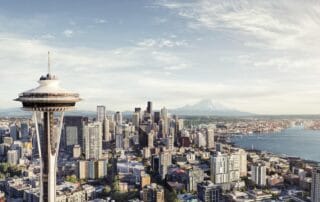
Seattle, Washington Service Area
Seattle, Washington is the primary urban hub of the Pacific Northwest. Located within King County, the city proper sits on a narrow isthmus—a thin strip of land—constrained by the saltwater Puget Sound to the west and the freshwater Lake Washington to the east. This unique positioning creates a city defined by steep hills, expansive shorelines, and a dense urban canopy that earned it the nickname “The Emerald City.”
Indigenous Roots: The People of the Inside
The land within Seattle’s current boundaries is the ancestral home of the Duwamish and Suquamish tribes. Long before incorporation, the Coast Salish peoples maintained permanent winter villages along the shores of Elliott Bay and Lake Washington. The city is named in honor of Chief Si’ahl, a leader of both tribes who was instrumental in the city’s early history.
Physical Geography and Landmarks
Seattle’s topography was carved by the Vashon Glaciation, resulting in a series of north-south ridges and several prominent hills. Within the city limits, the landscape is defined by:
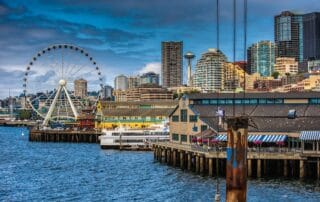
- Elliott Bay: The deep-water harbor that serves as Seattle’s primary maritime gateway to the Pacific.
- The Ship Canal: A man-made waterway including the Ballard Locks, which connects the saltwater of the Sound to the freshwater of Lake Union and Lake Washington.
- Lake Union: A freshwater lake located entirely within the city center, famous for its houseboat communities and tech industry presence.
- The Seven Hills: The city is famously built upon hills such as Capitol Hill, Queen Anne Hill, Beacon Hill, and First Hill.
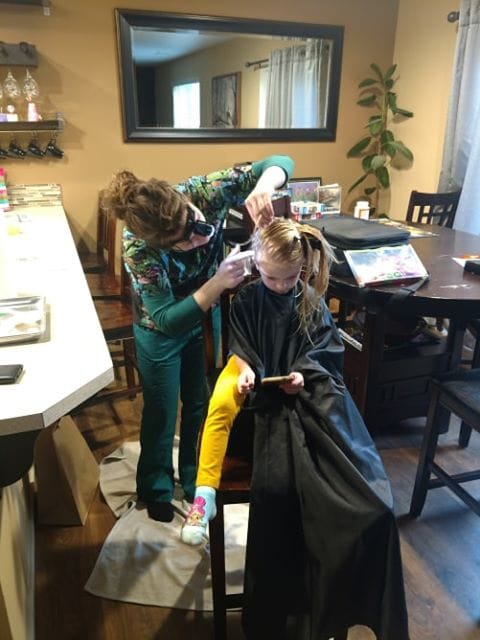
Lice Charmers Services:
Political Boundaries: City Council Districts
Seattle is governed by a mayor-council system and is divided into seven distinct City Council Districts. Each district represents a specific geographic portion of the city proper:
- District 1: West Seattle and South Park (the city’s southwestern-most corner).
- District 2: Southeast Seattle, including the Rainier Valley and Beacon Hill.
- District 3: Central Seattle, encompassing Capitol Hill and the Central District.
- District 4: Northeast Seattle, including the University District and Wallingford.
- District 5: North Seattle, bordering the city’s northern limit at 145th Street.
- District 6: Northwest Seattle, including Ballard and Green Lake.
- District 7: The urban core, including Downtown, South Lake Union, Queen Anne, and Magnolia.
Primary Seattle Zip Codes
The following zip codes are located strictly within the Seattle city limits:
| Zip Code | Primary Neighborhood |
|---|---|
| 98101 | Downtown / Central Business District |
| 98103 | Fremont / Wallingford / Green Lake |
| 98105 | University District |
| 98109 | South Lake Union / Lower Queen Anne |
| 98112 | Madison Park / Arboretum |
| 98116 | Alki / West Seattle |
| 98119 | Upper Queen Anne |
| 98122 | Capitol Hill / Central District |
Historic Neighborhoods and Urban Villages
Seattle is a “city of neighborhoods,” each with a distinct cultural identity:
- Pioneer Square: Seattle’s oldest neighborhood, featuring Romanesque Revival architecture and the “underground” city.
- The International District (Chinatown-ID): A historic hub for Seattle’s Asian-American communities.
- Ballard: Once a separate city of Scandinavian fishermen, now a dense residential and maritime industrial hub.
- Fremont: A quirky, arts-centric district located on the north bank of the Ship Canal.
- Magnolia: An affluent, peninsula neighborhood that contains the city’s largest park.
Protected Areas and Public Greenspace
Despite its urban density, Seattle maintains significant protected acreage within its borders:
- Discovery Park: Located in Magnolia, this 534-acre preserve is the largest city park, featuring sea cliffs and meadows.
- The Washington Park Arboretum: A 230-acre world-class botanical collection managed by the University of Washington and the City.
- Seward Park: Occupies the entirety of Bailey Peninsula on Lake Washington, containing rare old-growth forest.
- Green Lake Park: A glacial lake surrounded by a 2.8-mile path, serving as the city’s most-used recreational hub.
Economic Infrastructure: Port of Seattle
The Port of Seattle is a vital economic engine located within the city. It includes:
- Terminal 91: Located at the north end of Elliott Bay, serving the North Pacific fishing fleet and cruise industry.
- Terminal 46 & 18: Major container shipping facilities that link Seattle to global markets in Asia.
- Fishermen’s Terminal: Located in Interbay, it has been the home of the North Pacific fishing fleet since 1914.


1
EXPERT ADVICE
Answers from a lice pro.
2
SCHEDULE
Usually same-day.
3
GET LICE-FREE
In-home or our lice clinics.
4
STAY LICE-FREE
60-day guarantee keeps you lice free.