
The Science of Spreading: How Head Lice Move Between Kids and Parents
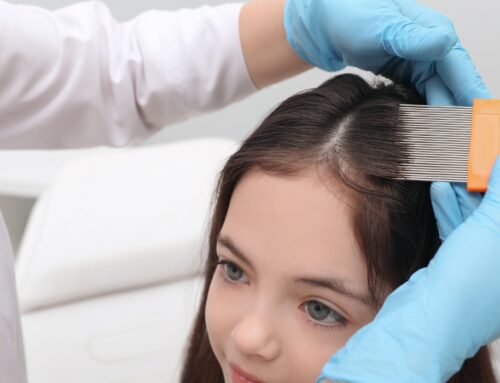
At Lice Charmers clinics, we see a consistent pattern in our clinics: the majority of our patients are elementary-aged children and their mothers. While head lice can certainly affect boys and men, statistical data and our own clinical experience show that girls and women are more frequently infested.
This susceptibility is often attributed to social behavior rather than biology. Young girls tend to engage in more “closed-circle” play, which involves more frequent head-to-head proximity. Additionally, longer hair provides a larger “landing zone” for a crawling louse to grab onto during brief moments of contact.
The Mechanics of Transmission: How Infestations Begin
The medical term for a head lice infestation is Pediculosis capitis. To understand how to prevent it, you must first understand how these parasites move. Head lice are biologically incapable of jumping, hopping, or flying. They lack the powerful hind legs of a flea or the wings of a fly; instead, they are equipped with specialized claws designed specifically for gripping and crawling along human hair shafts.
1. Direct Hair-to-Hair Contact
This is the primary driver of almost all infestations. For a louse to move to a new host, the hair of an infested person must physically touch the hair of a new person. This happens most often during:
- Playdates, sleepovers, and sports activities.
- Family members cuddling or sharing a bed.
- Group photos (“selfies”) where heads are pressed together.
- Children huddling over a shared tablet or book.
2. Fomite Transmission (Indirect Contact)
While less common, lice can be spread via “fomites”—inanimate objects that have recently been in contact with an infested scalp. Because a louse can only survive for 24 to 48 hours away from its food source (the human scalp), this type of transfer must happen rapidly. Common culprits include:
- Shared hair accessories like scrunchies, headbands, and brushes.
- Hats, scarves, and hoodies.
- Shared towels or pillows.
Origins and Biology: Where Do They Come From?
A common myth is that head lice come from the grass, pets, or “dirty” environments. In reality, head lice are obligate parasites that live exclusively on humans. They do not infest dogs, cats, or other animals, and they cannot survive in your carpet or backyard.
Biologically, human lice have evolved alongside us for millions of years. They prefer the warmest parts of the scalp, which is why you will most often find them—and their eggs—concentrated behind the ears and at the nape of the neck.
The Prolific Life Cycle of a Louse
Understanding the timeline of an infestation is key to successful treatment. A single female louse can lay up to 8 eggs per day, leading to an exponential population explosion if left untreated.
- The Nit (Egg): Nits are glued to the hair shaft with a cement-like substance. They take about 7 to 10 days to hatch.
- The Nymph: Once hatched, the louse is a “nymph.” It looks like an adult but is smaller. It takes about 9 days of feeding to reach maturity.
- The Adult: An adult louse is roughly the size of a sesame seed. While they only live about 30 days on the head, they spend that entire time mating and laying more eggs.
Breaking the Cycle: Prevention and Communication
If you discover an infestation, it is not a reflection of your home’s cleanliness. However, it does require immediate action. Open communication is your best tool for prevention. By notifying your child’s school, daycare, or recent playmates, you allow other parents to check their children, effectively stopping the “re-infestation loop” in your community.
By understanding that lice are simply “crawlers” looking for their next meal, you can take practical steps—like keeping long hair in braids or buns—to make transmission much more difficult.
Next: 10 Head Lice Facts
References
Wikipedia: Beauty salon
Yelp: Portland Lice Salons
Mayo Clinic.org: Head Lice
Healthy Children.org: Head Lice