
Head Lice Management: Diagnosis, Treatment, and Prevention
Effective head lice removal requires a clear understanding of how these pests behave and the most reliable ways to eliminate them. The following guide, featuring insights from Lice Charmers’ head lice clinics, covers essential facts regarding diagnosis, treatment options, and associated costs.
I. Understanding Head Lice: The Basics
Head lice are tiny, wingless insects that reside on the human scalp and feed on small amounts of blood. While a lice infestation is a common issue—particularly among school-aged children and childcare workers—it is important to remember that lice do not transmit infectious diseases. They are a nuisance, but they are not a health hazard.
II. Symptoms and How Lice Spread
The most common sign of lice is a tickling sensation or persistent itching on the scalp, sometimes accompanied by redness. However, itching is an allergic reaction to louse saliva, and because not everyone is allergic, an infestation can exist without any symptoms at all.
Transmission Myths vs. Facts
- Direct Contact: The primary way lice spread is through direct head-to-head contact.
- Indirect Contact: Though less common, lice can spread via shared items like hats, hairbrushes, combs, headbands, or helmets.
- No Jumping or Flying: Lice do not have wings or powerful jumping legs; they can only crawl.
- Host Specificity: Human lice cannot live on pets, and you cannot “catch” lice from your dog or cat.
III. How to Perform a Professional Lice Check
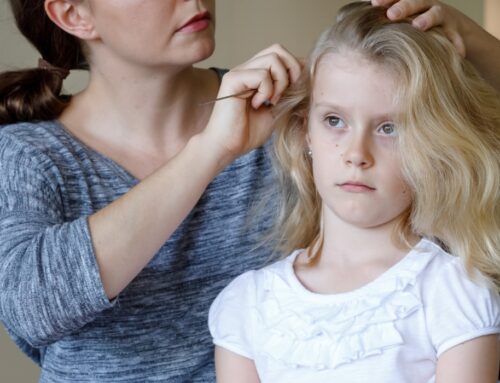
To accurately diagnose an infestation, you must conduct a thorough lice check. Look for nits (eggs), which are tiny, oval-shaped specks about the size of a pinhead. Unlike dandruff, nits are glued firmly to the hair shaft and cannot be easily brushed away.
A single female louse lays between three and eight nits daily, usually within 1.5 cm of the scalp to utilize body heat for incubation. The most effective diagnostic method is “wet combing” using the following steps:
- Apply Conditioner: Cover dry, brushed hair with conditioner to slow down louse movement.
- Section the Hair: Use a fine-tooth lice comb to comb from the roots to the ends.
- Wipe and Inspect: After every stroke, wipe the comb onto a white paper towel.
- Verify: Look for moving lice or teardrop-shaped nits on the towel.
- Repeat: Comb every section of the head at least five times.
- Communicate: If lice are found, every person who has had head-to-head contact with the individual should be screened and treated simultaneously to prevent re-infestation.
IV. Treatment Methods and Costs
There are several ways to tackle an infestation, ranging from DIY home care to professional clinical services.
1. Professional Removal Services
For parents who want a guaranteed result without the stress, professional clinics or mobile specialists are available. While highly effective, these services are an investment. You can expect to pay approximately $100 per hour, and depending on the severity, the total cost can reach several hundred dollars per child over one or more visits.
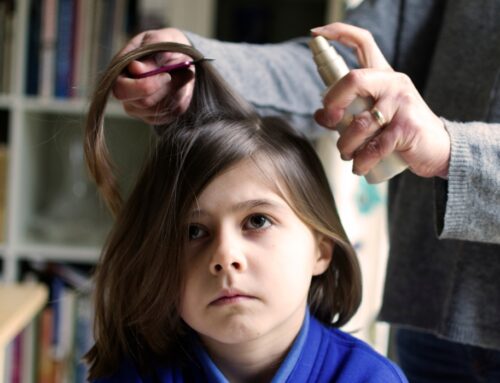
2. Topical Pediculicides (Over-the-Counter & Prescription)
Medicated treatments are generally grouped by their active ingredients:
- Pyrethrins and Synthetic Pyrethroids (Common in OTC brands)
- Organophosphates
- Herbal/Natural products
Note: No treatment is 100% effective at killing eggs. You must repeat the application 7–10 days after the first treatment to kill any nymphs that hatched after the initial round.
3. Wet Combing
For children under two years of age—or for those avoiding chemicals—manual removal is the preferred “DIY” alternative. This involves using the conditioner-and-comb method every few days until no lice or nits are found for two full weeks.
4. Oral Medications
In resistant cases, doctors may suggest oral medications like Ivermectin or a combination of Bactrim and permethrin. These are typically reserved for situations where topical treatments have failed.
V. Post-Treatment Care
It is normal for the scalp to remain itchy for a few days even after successful lice treatment. This is usually due to skin irritation rather than remaining bugs. Over-the-counter antihistamines can help soothe this discomfort. Keep monitoring the hair weekly to ensure the cycle has been completely broken.