

Seattle School Lice Policy: A Parent’s Guide to the Facts
Dealing with head lice can be stressful, but understanding the official Seattle Public Schools (SPS) lice policy can make the process much smoother. SPS follows modern, evidence-based guidelines from the CDC and the American Academy of Pediatrics. Their policy is designed to effectively manage head lice while keeping kids in school and protecting student privacy.
This guide provides accurate information on diagnosis, treatment, and Seattle’s specific return-to-school rules.
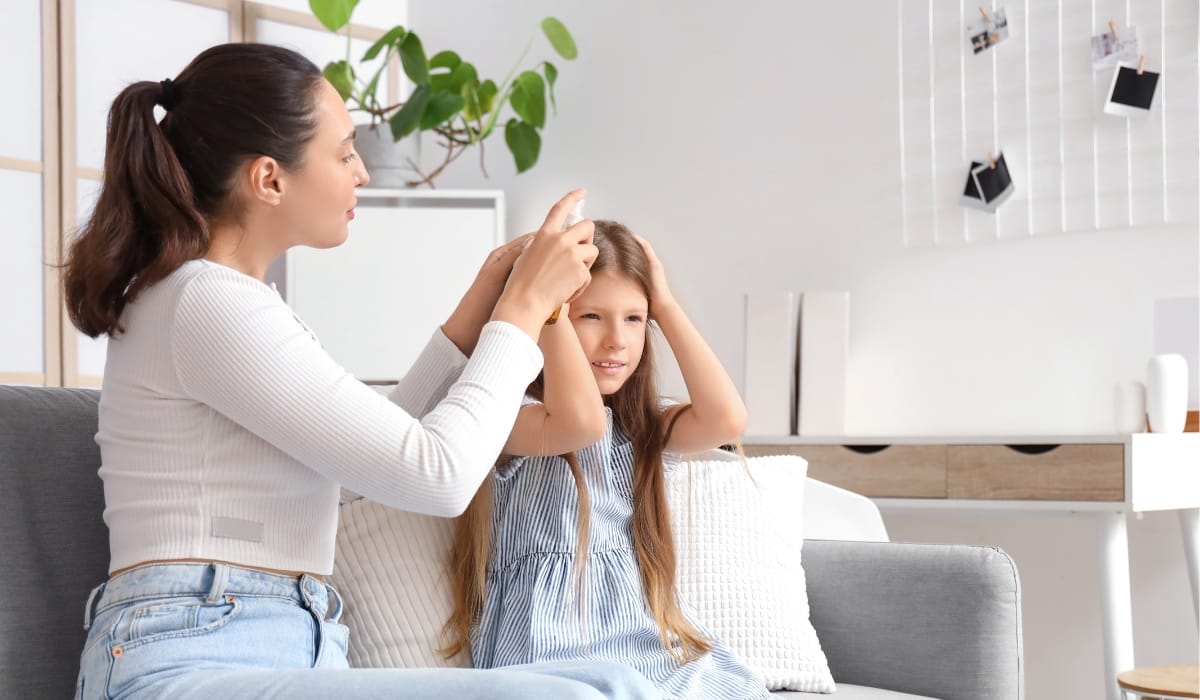
In a Seattle home, an adult carefully inspects a child’s hair for lice. The child sits on a couch, looking calm while receiving attention.
Understanding Seattle’s Modern Approach to Head Lice
Seattle Public Schools focuses on an approach that minimizes disruption and stigma. Key principles include:
- Confidential Parent Notification: If live lice are found on your child, the school will notify you directly and privately. Widespread classroom notifications are not standard practice to protect student confidentiality.
- No Immediate Exclusion: Students with live lice are not pulled from class and sent home immediately. They remain in class for the rest of the school day to avoid embarrassment and lost learning time.
- Focus on Education: The district prioritizes educating parents on how to identify and treat lice at home, as this is the most effective way to manage infestations.
Return-to-School: Seattle’s “No-Nit” Policy Myth Debunked
This is the most important rule for Seattle parents to understand. Contrary to old policies, Seattle Public Schools does not have a “no-nit” policy.
- Return After First Treatment: Your child can return to school the day after their first treatment, even if nits (eggs) are still present in their hair.
- Why No “No-Nit” Rule? Health experts recognize that nits are not transmissible—they are cemented to the hair shaft. Requiring a child to be nit-free causes unnecessary missed school days and is not effective at preventing spread. The focus is on eliminating live, crawling lice.
- Parent Communication: While no formal “proof of treatment” is required, you should inform the school that your child has been treated. Open communication helps everyone stay informed.
The Role of School Health Services
School nurses play a supportive, not enforcement, role in managing lice.
- No Routine Screenings: SPS does not conduct routine, school-wide lice screenings. Research has shown these are not an effective way to control lice.
- Symptom-Based Checks: A school nurse may check an individual student if they are showing symptoms, such as persistent scalp itching.
- Providing Resources: The school health office is a valuable resource for parents, offering guidance and information on effective treatment options.
Identifying Head Lice: Signs and Symptoms
Head lice are tiny, crawling insects that feed on blood from the scalp. They lay eggs called nits, which stick firmly to hair shafts close to the scalp.
- Symptoms: The most common symptom is itching on the scalp, especially behind the ears and at the back of the neck.
- Spotting Nits: Nits are tiny, yellowish-white, oval-shaped specks. Unlike dandruff, they cannot be easily brushed or shaken off.
- Finding Live Lice: Live lice are tan or grayish-white, about the size of a sesame seed, and move very quickly, making them difficult to spot.
How to Check Your Child at Home
The best way to check is with a fine-toothed nit comb on wet, conditioned hair, and you can learn more detailed techniques for how to check for lice at home. Work in small sections under a bright light, combing from the scalp to the end of the hair shaft and wiping the comb on a paper towel after each pass.
Treatment Options for Head Lice
When it comes to treatment, you have several choices, including professional lice treatment options that can provide guaranteed results. It’s important to select a method that is both safe and effective for your child.
Over-the-Counter and Prescription Treatments Many over-the-counter (OTC) products use pyrethrin or permethrin to kill live lice. While accessible, lice in some areas have developed resistance to these chemicals. Always follow the instructions, which often require a second application 7-10 days later to kill any newly hatched lice. If OTC treatments fail, a doctor can prescribe stronger options.
Non-Chemical Treatment: Wet Combing Wet combing is a safe, pesticide-free method. It involves meticulously combing through conditioned, wet hair with a specialized lice comb every few days for two weeks to manually remove all lice and nits. This method requires patience but is very effective and avoids chemicals.
Professional In-Home Lice Removal Services For a stress-free and guaranteed solution, professional services offer expert help in the comfort of your home. Technicians use safe, non-toxic methods and professional-grade tools to ensure every louse and nit is removed efficiently.
Choosing a professional service ensures:
- Expert and Thorough Removal: Trained experts know exactly where to look and how to remove lice and nits effectively.
- Peace of Mind: Get it done right the first time without the frustration.
- Education: Professionals provide clear advice on how to clean your home and prevent lice from returning.
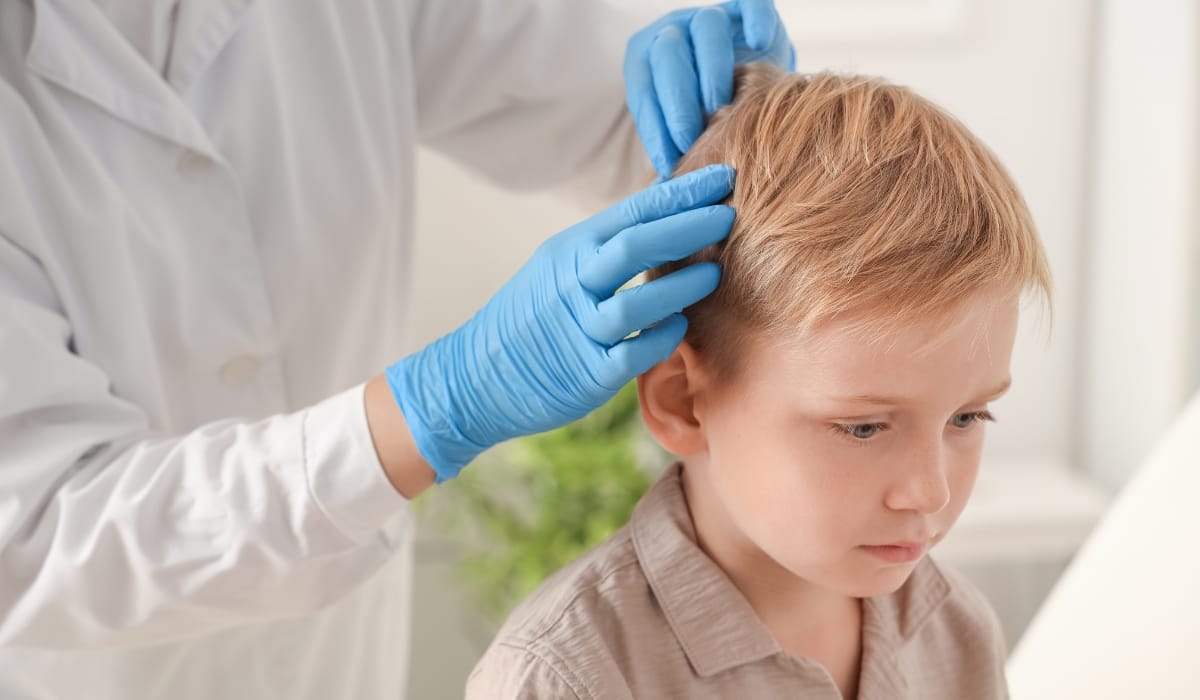
A professional is carefully inspecting a young child’s hair for lice at a treatment facility in Seattle. The child looks calm while receiving attention for lice removal.
Preventing Head Lice Spread at School and Home
Lice are spread almost exclusively through direct head-to-head contact. They cannot jump or fly.
- Teach Prevention: Encourage your child to avoid head-to-head contact with friends during play, group work, or when taking photos.
- Don’t Share Personal Items: Remind kids not to share items that touch the head, such as hats, scarves, brushes, combs, and headphones.
- Regular Home Checks: Check your child’s head for lice regularly, especially if you hear of cases at school or among their friends.
- Clean Household Items: After an infestation, wash bedding, recently worn clothing, and towels in hot water (130°F or 54°C). Items that can’t be washed can be sealed in a plastic bag for two weeks.
Contact Us for Safe & Guaranteed Lice Removal!
Feeling overwhelmed? You don’t have to handle this alone. Lice Charmers mobile lice clinics offer professional, in-home Seattle lice treatment services throughout the Seattle area as well as at our Renton location. Our technicians use safe, non-toxic, and effective methods to get your family lice-free quickly.
Book an appointment today for fast relief and the peace of mind that comes with expert care!
Frequently Asked Questions
What is the lice screening procedure in Seattle schools?
Seattle Public Schools does not perform routine or school-wide lice screenings. School nurses will only check individual students who are showing symptoms of head lice, like persistent itching.
How do Seattle schools manage a lice case?
They confidentially notify the parents of the affected student, who is sent home at the end of the school day. The school provides educational resources and allows the student to return the day after treatment begins.
What do I need to show the school for my child to return after lice treatment?
No formal documentation or “lice-free” certificate is needed. You simply need to begin treatment and can verbally inform the school. Your child may return the next day.
Do all school districts near Seattle have the same lice policy?
Policies can vary, but most school districts in the region, following state and national health guidelines, have moved away from “no-nit” policies to reduce unnecessary school absences.
How can I be sure all the lice and nits are gone?
Thorough treatment and consistent combing are key. For 100% certainty, a professional lice removal service can perform a detailed check to identify lice nits and eggs and provide clearance.